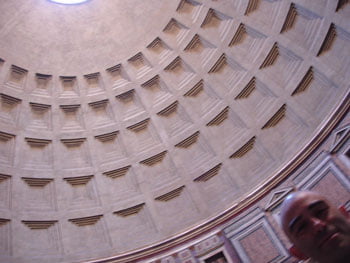
the view from over here…

Friday, December 2nd, 2011

Raheleh and I in Hamadan with some ordinary Iranians behaving just as normally as people do anywhere...

Just a quick post to comment on the ‘situation’ in Iran. Friends and family keep telling me that I’m “lucky” to have got out of Iran before this business with the British embassy in Tehran blew up. I cannot help but notice how the coverage on the TV here is very similar to that that I saw before I went to Iran. I cannot help further noticing that the comments people are making to me now – about how dangerous Iran is – are the same as they were before I went.

This seems to me curious on various levels. If I hadn’t actually been there I would have concluded – as everyone else seems to be doing – that yes, indeed, Iran is somehow ‘dangerous’… and yet when I was actually there I not only felt that it wasn’t dangerous, but I actually felt noticeably safer there than I would in many parts of the UK. In spite of having reported on this – acting almost as a live reporter for my friends and family – none of what I said seems to have softened people’s attitudes towards Iranians.

I don’t know if what is happening there indicates that something has changed – violently and for the worse – but, from my experiences, this seems to me unlikely. Instead I am left wondering why it is that the view of Iran from here is so completely different, so unrelentingly negative, than it is from over there…..

Tags: , , , , , , ,
9 Comments »

being Persian…

Thursday, November 24th, 2011

the great dome of the Naqsh-e Jahan (Imam Mosque) in Esfahan...

columns and arches of the Naqsh-e Jahan mosque...

Naqsh-e Jahan (Imam) square (with smudges on camera lens that have spoiled many of my photos)

looking up in the Sheikh Lotfollah Mosque, though this giving little of the feeling of being there...

Bagh-e Fin...

Akbar in his carpet warehouse...

pigment grinding stone without a camel...

arrow on the ceiling of my hotel room pointing to Mecca...

metal work shop in Esfahan - that 'teapot' is almost as tall as a man...

entrance to the Armenian cathedral in Esfahan called Vank, and unfortunately pronounced by the locals...

one of the ancient bridges at Esfahan on a day when the dam upstream was opened to let the river Zayandeh run...

Persian woman © Gernot Liska

Persian woman and gender specific sign © Gernot Liska

techno-loving taxi driver © Gernot Liska

my visa for Iran - the Persian reads "Ricardo de Sousa", a consequence of my many Portuguese names on my passport...

Khomeini and Khamenei (note the calligraphy at the bottom that is like spume on a windblown sea wave) - alas, another of my slightly out of focus photos...

Ehsan House, my hotel in Kashan...

a grander traditional house in Kashan...

interior of a historic house in Kashan...

the nondescript steel 'visa' door...

serving window in visa 'office'...

Ismail the Rescuer...

in the courtyard at Ehsan House, Kashan...

Claudia and me...

Erwann and his bike as he set off...

and this is what Gernot gets for trying to be funny.....

Persepolis, a world class site, almost free of tourists...

Iran, lost in progress..?

Xerxes' Gate of All Nations, Persepolis...

a Persian © Gernot Liska...

I wrote this on 19_11_11, but the internet went down at my hotel and, with the interminability of adding photos to this blog on a slow internet connection, I decided to finish this up at home.

I nearly cried when I walked into the main hall of the Imam Mosque in Esfahan – overwhelmed by the beauty of that vast space. Perhaps the effect would have been almost as powerful had it merely been a plain stone edifice, but the lovely blue tiles that cover its surfaces simply stun the senses. The proportions and the scale of the building, the way its volumes connect – some closed, some open to the sky – and how this space is further articulated by columns and vaults – these factors alone would have made it one of the most majestic buildings I have ever entered. But it is those tiles that raise the building to a sublime level; forming a surface of such complexity that you would imagine that the eye would become bewildered, but that doesn’t happen, instead the tiled surface emulates the fractal complexity of nature, but in a way that is supra-natural.

The face of the mosque, the massive gateway that overlooks Imam Square (until recently called Naqsh-e Jahan, ‘the pattern of the world’ – as I think was the mosque – as it is still is by most Esfahanis), is actually an immense ceramic mosaic, but Shah Abbas, the sovereign who had all of this built, was told by his architect that if they proceeded to sheath the entire building in that manner, that it would take decades and that, indeed, the shah would not live long enough to see it completed. Reluctantly, the Shah agreed to allow the work to be finished with tiles. An interesting story that speaks of ambition and of what it took to pull off an achievement of such grandeur and magnificence in a pre-industrial era.

There is something about the structures of this period (called Safavid after the dynasty, and roughly contemporary with James I in England – the sixth in Scotland) that seems to me to speak eloquently about the Persian soul. Beyond its almost ‘computer graphical’ decoration, this mosque displays a clarity of vision, a purity of form that seems almost Modernist. Apart from some rolled up and stacked carpets, there is no clutter of any kind. Both in it’s lean geometry and organic detailing, it could be the discarded shell of some cosmic crustacean.

Halfway down the side of the immense square (apparently, the second largest on Earth, after Tianamen – though it manages to maintain a human scale), there is the smaller Sheikh Lotfollah Mosque. My mouth literally fell open as I walked into it. Tiny in comparison to it’s bigger brother but, with it’s exquisite tiles, it seemed more a piece of porcelain than a building.

If I consider these two wonders along with the sublime, restrained Bagh-e Fin – a formal garden I later visited in Kashan – then I begin to sense the presence of a very particular way of appreciating the world. This garden, it’s division by water channels into balanced quadrants making it clearly a direct successor to Cyrus’ garden at Pasagard, seems modest in comparison with the baroque excesses of, say, Versaille. Not here the vast scale that deliberately attempts to cow the visitor before the glory of a sun king, nor the over-elaborate and deliberate geometries that attempt to display the dominion that man has over nature – but rather a reverie that a poet might experience while contemplating the mysteries of nature (admittedly a poet of a mathematical bent). Formality without oppression and – in the case of the mosques – scale that does not crush the spirit of the onlooker, but rather fills him with wonder; detail that does not weary his eye but suffuses it with delight.

_____________

I met Akbar in the Great Bazaar at Esfahan. A charming, softly spoken gentleman with excellent, iodiomatic English. He took me down to see his carpet ‘warehouse’ – a large room beneath the bazaar; the place is an ancient warren. He talked to me about the nomads whom he visits regularly to purchase those pieces of their work that, having used them for years, they replace with something newly made. Labours of love, since a nomad woman weaves and embroiders each piece for her family following patterns that perhaps her mother has passed down to her, or merely indulging her own artistic vision. Akbar is sad that the lifestyle of these people, one that has thrived for millennia, is likely soon to disappear – because their children, educated (presumably by the state?) are choosing to move to the cities and, without them, the nomad way of life is bound to perish.

Esfahan has factories that make carpets by hand, carpets that are much more ‘perfect’ than those made by the nomad women. These are the carpets that Akbar says most Iranians prefer, though both he and I dislike them – for they look very much like those made by machine. He grumbled that his wife won’t let him have any of the nomad carpets that he loves in his own house. We had tea together in a tiny cafe in the bazaar and talked about the state of the world, and he took me to see the dyes being ground (no longer by a camel driving the grinding stone) for colouring the wool for carpets; to watch cotton being printed by hand from wooden blocks; and tiles being made for mosques and houses.

With his son, Kourosh (Cyrus), we talked about the difficulties that Iranian men have in getting married. Now this is something that I had already learned about from Karim on the train. He moaned that he did not have enough money to get married and told us that this was a common problem in Iran. Joachim and I quizzed him about this because it seemed so contrary to the preconceptions that we have about the relationship between the genders in Iran. It seems, at least according to these men I have talked to about it, that women are promised money as part of the marriage agreement. The minimum is, apparently, something in the region of $100,000 – though it can be a lot more (and bear in mind that the average wage in Iran is at best only a third of what it is in the UK). A wife can demand this money from her husband at any time and he has to pay it to her in gold coins. Downcast, Kourosh admitted that he is paying a large sum to his estranged wife at one gold coin ($600) a month. I’m not sure that this isn’t something akin to maintenance payments – though there were no children involved here.

What with this and other things I have been told, I was left believing that women in Iran are actually very much in charge – this is certainly what every Iranian man I have spoken to claims. However, I had only heard one side of the story – naturally, because women are less likely to open up to strangers, especially if they are men. Claudia, a German traveller I met in Kashan, told me a different story. She had talked to Iranian women and they had told her that a husband has the right to beat his wife – and that such beatings are not uncommon. Further, a wife cannot obtain a divorce unless her husband chooses to give it to her. So that, even if she leaves him, she will remain in the limbo of still being his wife unless he chooses to release her. She cannot marry another man, and is still under his control.

So, apparently, there is some kind of balance of power between the sexes, but not, it appears, equality; rather an asymmetric ability that each has to hurt the other.

Further, I have had it reported to me that the Iranian young are miserable. I suppose I could have quizzed those of them I have talked to, but when I may have had the opportunity to do so, we talked about other things. Nevertheless, I have observed, in Esfahan, teenage couples on park benches, or down by the river, seeming to be lost in each other much as young people anywhere. However, these sightings have been rare in other cities. Mostly, girls and boys seem to form separate societies. You often see young men walking around hand in hand. Two such asked me to take a photo of them against one of the beautiful ancient bridges that span the river at Esfahan. I regretted almost immediately not having asked them if I could take one of my own – because then I could have shown you. I’m sure they would have been more than happy to let me. They behaved just like a ‘couple’, though I am certain they were not gay. It is just that the injunction here against touching women is very strong and so it seems to me that men end up – women too, no doubt – forming perhaps more intense bonds with those of their own gender than they might otherwise do.

Several woman have expressed to me irritation at having to cover themselves. They vary in the way they choose to do this: from looking like ‘nuns’, to wearing their hijab so far back on their piled up hair that it looks like it is just about to slip off. Even those who look like nuns can often wear considerable amounts of makeup, not to mention stilettos.

Finally, a couple more pieces of data for you to mull over. First, a woman taxi driver, entirely shrouded in a chador, playing heavy techno as she drove and nodding along with it. Second, a woman nearly 40, very capable, who has chosen to remain single, because – she said – the Iranian men she had come across, however liberal, have all had a ‘foundational layer’ of traditional attitudes, that meant she was not allowed to be herself, and so she is not only, potentially, risking having no children – an ambition that everyone here, male and female, seems to hold – but also she is attempting to emigrate to North America.

I don’t pretend to any knowledge of this issue other than my observations and what people have told me, but it does seem to me that the notions we have in the West about gender relations here are probably uninformed, simplistic and bordering on prejudice.

_____________

The visa that I obtained in the UK, with quite a bit of hassle, allowed me precisely 30 days in Iran. Alas, this and the stamp put on my passport when I entered the country – while half-asleep passing my passport from my bunk on the train down to an Iranian border guard – are all in Persian script and dated according to the Persian calendar. Now I can read the first, but never made the attempt to come to terms with the second. I merely asked a few Iranians and they told me that it ran out the day before I left. This was what I expected. I had bought the return flight on the basis that it was the shortest and cheapest, and did not leave at an unholy hour and, according to my guide book, getting a visa extrension is a simple matter….

Early on my first morning in Esfahan, I got a taxi across town to the government office that dealt with visas. I was scanned, and my body and bag were meticulously searched. I hung about and was eventually taken into the chief police officer’s office and made to wait as he strutted about speaking loudly. When he deigned to notice my passport being waved in his face (by the police officer who had accompanied me) he glanced at it, said it was too early for me to seek an extension, and told me to go and extend my visa in Kashan. I was told that would be very easy. I was left feeling a tad nervous – my guidebook didn’t even mention Kashan as one of the places where visas could be extended… besides, it says that the process can sometimes take up to a week and, if I did not wish to miss my flight, I could only stay 2 days in Kashan.

So, when I got to Kashan, I asked the receptionist at my hotel what I should do. The impression he gave me was that this was an unheard of notion. He made some phone calls and could find out little, except that there was a building I should go to somewhere near a faraway roundabout. Off I went. A taxi dropped me at said roundabout and then I asked for directions and was sent to a building that was flying Iranian flags and to whose railings were attached many quotes from the Quran that -and the pictures of Khomeini often ringed with flowers, and his successor Ayatollah Khamenei (who looks remarkably like Alec Guiness!? – Kind Hearts and Coronets comes to mind) – often indicate government buildings.

Eventually I managed to find a guard tower with a soldier in it, and he responded to my comments of: “passport, visa” by pointing in a vague direction. A rather keen man standing nearby took it upon himself to get me there. We jumped into his car – the engine of which kept cutting out at the most inopportune times – and proceeded to drive around, stopping to ask anyone he saw for directions. Back and forth, this way and that, while all the time he grinned insanely and we exchanged various English and Persian words in a conversation Alice in Wonderland would have found exasperating. At last, his enthusiasm exhausted, my driver pointed me up an alleyway, and drove off.

Rather unconvinced, I wandered up it and found an open door in what looked like a block of flats and, climbing several floors, found, to my surprise and delight, that it led to some kind of government office. After being redirected several times, at last a man behind a desk drew a map for me, and even took me back down to the alleyway and pointed in which direction I should go.

Off I slogged, eventually reaching the roundabout I had started off at. The drawn map was less than clear. I wandered along behind a park, past any number of buildings that looked decidedly residential. Finding at last another guardhouse, I asked the soldiers in it for help. Eventually, one of them came out and walked along behind the bars, and got some old man, on my side of the bars, to take me to a nondescript steel door set into a wall and left me standing there. I knocked. Nothing. I looked around me and there was no sign of life. I knocked again. Nothing. I would have walked away except that an old woman came to stand beside me, looking at the door expectantly. She knocked. Nothing. Then, after perhaps 20 minutes, a tiny porthole opened in the wall at which we saw a woman’s face. Soon after the door opened and let us into a tiny waiting room.

I showed my passport and tried to indicate what I wanted, with dodgy Persian and much hand waving. A police officer joined the woman and they both looked at me with puzzled expressions. I was saved by a man called Ismail who happened to come in wanting something and turned out to speak English. He acted as interpreter. I explained what I wanted, and the police officer said that he might be able to do something, but first I had to fill in several forms. Ismail kindly drove me to a bank that was about to close, where he filled in more forms for me, and bullied his way to the front of the queue. He deposited the money I gave him in the appropriate government account and then drove off. I returned to the steel door, handed over forms, my passport, photocopies Ismail had also got for me, mugshots (that I had had to have taken earlier) and was told to return the next day.

Back at my hotel, the receptionist laughed when I told him I was hoping to get the extension the next day. Not very encouraging that. Nevertheless I returned at the appointed time and, using another receptionist on my phone as an interpreter, the policeman told me that I didn’t need an extension because my visa was still valid for the day I was flying home….. Hmmmm…. Having paid my money, and feeling that it was better to be safe than sorry, I asked for and got, an hour later, my extension.

Incidentally, there and back, I managed finally to perfect my ‘I’m a Persian’ act – by mumbling my destination and staying quiet so that, instead of paying 20,000 rials, I only paid something less than 4,000. A triumph at last in my covert war with the taxi drivers!! Not that I’m suggesting that I’m an advocate of ‘stealth tourism’ – I’m as happy as the next man to be ripped off (in countries where I know what I lose is relatively little to me, and relatively much to them). I can’t very well see the point of a (relatively) poor country inviting tourists merely to have them spend just as much as one of its citizens. However, the feeling of continually being hung out to dry can become a little wearing…

So, from the gloom of thinking that I might end up having to somehow delay my flight, I found myself feeling rather chuffed that, in several ways, I had managed to buck the system.

_____________

At the Ehsan House Hotel in Kashan – probably the most delightful and relaxing hotel I’ve stayed in Iran – I met other European travellers for the first time. If this appears strange it is partially because many of my destinations have been off the tourist trail, and that apparently Iran only manages to attract 56,000 tourists annually, and that this is, besides, low season.

I met Claudia as I was checking in, and as she was just about to leave, but we decided to have tea together, and ended up talking for so long, that it grew dark, and she decided to stay another night. Claudia is German and has been travelling around Asia for 3 years! We mostly discussed personal issues. Later, we were joined by Erwann, a Frenchman who lives in London and who has jacked in his job to cycle to Singapore from Istanbul. (As one does – remember Tom?) It seems that Asia is criss-crossed by European youths on bicycles. Of course the locals think these people are mad – for they know they’re ‘rich’ – and why would a rich man choose to cycle along dusty roads, breathing in diesel fumes for hundreds of miles? Of course, Erwann has been finding kind Iranians who had been putting him up – when he hasn’t been sleeping in the corner of some mosque.

The third member of this august group was an Austrian, Gernot. For some 20 years, he has been travelling as often as he can. His current job means that he is restricted to three two week holidays per year. He has been to some unlikely places: Ethiopia, for example. I would love to tell you everything he told me, it was all fascinating, however this is neither the time nor the place. What I will tell you is that we compared notes on places that we had both visited. Antigua in Guatemala, for one. When I was there in 2001, it was an isolated and crumbling colonial Spanish city and was much as it had been for centuries. He visited it 10 years later and reported that it’s old houses had been converted into shops and hotels; one even into the poshest Kentucky Fried Chicken he’d ever seen. The Mayan women who I had seen laying out their wares along the side of the street, were no longer permitted to do so. The textiles they had sold then had now been consigned to a sort of crafts supermarket. Similarly, Atitlan, a gorgeous blue lake high in the mountains, and ringed by volcanoes and native villages and that, when I was there, had a single, gently commercialised settlement that was filled with European hippies, now has every village full of hotels and tourists and international fast food joints. This in barely 10 years. When I was there everything seemed to be as it had always been.

Gernot told me of villages in remote parts of Laos, where he had witnessed a market in which he had been the only foreigner. Then, there had been only a couple of rooms that could be rented. On a second visit he found the place filled with hotels, and tour buses daily deposited more tourists than there were local people to wander around this once remote and working market.

As we mused sadly on how we tourists destroy what we travel to see and experience, it became obvious to me that I have been extremely lucky to come to Iran at this time. The problems that this lovely country currently is experiencing with some of the outside world have protected it from this tourist influx. That hardly anyone speaks English is a sign of this. Perhaps even the overhwelming warmth and friendliness the people here show to strangers is due to this: for, currently, we tourists are exotic creatures and, because the Iranians are precluded from travelling for financial and political reasons, we are the nearest most of them can ever hope to get to actually ‘touching’ the world outside Iran.

I have talked about the signs I have seen, the many signs, of how ‘progress’ is already causing much that was wonderful here to be lost. Akbar looked sad when he said that Esfahan had, when he was young, still looked much like Yazd – but the ancient houses and alleys had been bulldozed to be replaced with the characterless concrete buildings that, Gernot pointed out, make the suburbs of all the cities here look like those similarly spoiled across southern Europe, or all manner of other places across the globe, as we slowly rip up what was once a varied cultural tapestry and replace it with a monotonous, machine-made mediocrity. What is left here has shown me a glimpse of the amazing beauty that was once Iran.

Iran’s isolation will not last long. I have been told that there are already plans to increase annual tourist numbers into the millions. These will descend on those places I have visited and change them. The people will no longer see tourists as emissaries from foreign lands, but as an ever increasing part of their income. Can the hospitality they now give so freely survive being thus commercialised? Even if it does, tourists, locked away in their restored traditional house hotels – hotels too expensive for ordinary Iranians – will become isolated from the real people. Visitors will no longer have the incentive to struggle to understand and to be understood, for they will be hemmed in by Iranians who will speak perfect English, and so this incredible land will become just another ‘resort’ – another series of boxes to be ticked by tourists who can claim that they have ‘been there’.

_____________

But let me not sign off on this sour note. I am writing this in a hotel in Tehran and tomorrow I fly back to Scotland and my normal life. I came here seeking to confront the Persia, that has lived and grown in my imagination since I was a child, with the reality of what it is and of the remains of what it once was. These aims have been more than met, though the deepest of these will take a while to assimilate: for example, I have not yet been able to describe my experience at Persepolis even to myself. I also came to see the landscapes and to look into Persian faces. This too I have achieved, and it is these experiences that have been the most powerful in my daily life here.

I came to Iran seeking ancient Persia, but Iran is a modern country, and Iranians are a modern people. Both seem to me almost like a lost part of Europe. I have felt profoundly at home here. The warmth of the welcome the Iranians have extended to me has touched me deeply and I am humbly thankful to them for that.

But Persia still lives in this land and in these people, and Persia is something deeper than Iran. The Iranians are a people in which greatness sleeps and I look forward to when they resume their proper place in the world, for theirs is a voice that I believe we all need to hear…

Tags: , , , , , , , , , , ,
1 Comment »

in Yazd…

Saturday, November 12th, 2011

one last garden, the Bagh-e Dolat Abad...

the 33m high wind tower at Bagh-e Dolat Abad...

the crazy business conference...

spilled food and my knee...

a typical courtyard house...

Amir Chakhmaq complex and wooden palm nakhl (used in Ashura celebrations)...

one of many covered bazaars...

on the road to Yazd, view from my seat beside the bus driver...

the central courtyard of the Malek-o Tojar hotel...

central courtyard of the Mehr Traditional Hotel...

even more glamorous tent roof over a smaller courtyard...

old door with a male door knocker on the left and a female one on the right...

me standing before the Zoroastrian fire temple...

Mr Lorian and the fire that's been burning for 1500 years...

one of the 400 year old Tower of Silence...

bad photo of roadside rubbish taken from speeding car...

interior of pigeon tower showing levels and niches...

photo taken in near darkness across the ice pit towards Mr Lorian...

Chak Chak terraces up the mountain side...

doors to the Chak Chak shrine...

view from Chak Chak shrine...

Kharanaq...

mud brick wall and tower...

water reservoir cooled by four wind towers...

the bottom of a wind tower from which cool air pours out...

poor little cockroach......

I wrote this on the 9th, but it’s taken me a few days to insert the photographs…

Before I talk about Yazd, I want to tell you what happened today. I had, with pleasing efficiency, got up early, had a quick breakfast and had managed to see one last garden, as well as breezing through a museum on qanats (more about that later). A last minute rush to change some money, quick packing, ordering a taxi to take me to my bus for Esfahan, and then checking out. Then the hotel receptionists informed me that they didn’t have my passport. (You have to hand it in at any hotel you stay at here.) They explained that they had accidentally given it to some Iranian woman in error – because our names were so similar, apparently… *crazed stare to camera* Quite.

I naturally displayed some anger – I chose not rein this in so as to make sure, across the language barrier, that they understood that I was REALLY not pleased. Apart from anything else, tourists have been arrested for not having a valid visa, never mind no passport at all! Their proposal was that I should go on to Esfahan as planned, and that they would make sure that my passport would be sent on to my hotel there, from Tehran – where, apparently, it is currently holidaying without me.

Needless to say, I was having none of this. I asked them: and what if the passport doesn’t turn up in Esfahan? What would I do 150km away when the authorities asked me for my papers and I said, in my fanciest foreign: oh, alas, my last hotel in Yazd gave it away mistaking some Iranian woman for a bald farangi (oh, yes, that is what all non-Iranians are referred to as – have I said this before?). Tolerant as I am, and understanding, I’m not sure that were I in their position, I would find this entirely convincing.

At this my time of need, the estimable Mr Lorian (of whom much more later) appeared as the taxi driver who the hotel had phoned to take me to the bus terminal. Thinking about it now, this appearance at convenient moments of familiar characters might make me suspect that I may be in some kind of Persian farce – however elegant with its adobe walls, wind towers and formal gardens. I told them I wasn’t budging and they, bending over backwards in what I felt was true embarrassment and contrition, told me that I could stay at their expense. Indeed, I am typing this to you from behind the reception desk where they’re letting me use the only computer in this hotel with an internet connection. All food etc would be gratis. Somewhat appeased, I retired to lick my wounds.

Later, taking advantage of my snowy carte blanche, I joined the impossibly crazy seminar of local businessmen (perhaps not so local, my various frantic taxi rides this morning have all fallen foul of the large and posh white cars ferrying these luminaries to this hotel – located as it is within the warren of mudbrick alleys of this exquisite city.) Now I was about to tuck into the feast they had laid on for these gentlemen, sitting cross-legged amongst them on one of these takhts rather natty raised platforms, or ‘day beds’, when one of them, tripping, deposited an entire plate of food on my leg and jacket. More hotel staff appeared, fussing, and the hotel has now agreed to wash those clothes, and all the other dirty ones I have been lugging around with me in search of a laundry. I’m beginning to feel that I have somehow wandered on to the set of a Charlie Chaplin film – in which I am most definitely the tramp… What can I do but play my part and hope that my passport returns and that I can move on…

To more interesting matters: Yazd, oh Yazd! How lovely she is lying here between two vast deserts. I have really fallen in love with her. Bizarrely, this is the one place where I’ve developed yearnings to have a house – not seriously – but still… It is cold here – very cold, especially once the sun goes down. I came to Iran without a jumper and now that my coat is in the wash, I have asked to borrow one – we shall see how this further enhances my comic role. Checking out the temperature in Tehran and Shiraz before I left – if not scorching, at least warm – I assumed that this would be true for the whole country.

Another climactic digression, if I may. On reflection, I don’t think that, in my last post, I properly managed to explain the climate here. Iran is a very complex landform – one far more complex than most of us are used to. I say this with some confidence because this is a landform I have spent some time meditating on while peering at maps and climate charts. In spite of this I simply didn’t get it. To try and put it as plainly as I can: each city here – certainly the ones I’ve visited (though my endless interrogations of the natives seems to suggest that these are not anomalies) – each city here lies at a unique confluence of terrain, aspect, height and position relative to bodies of water, mountain ranges, seas. As a consequence, each city (and it’s environs) has a wholly unique climactic character. When this is combined with the overlaying of different migrational genetic groups, cultures, languages etc etc – it means that each city is unlike another.

Yazd is at the moment, as I have said, cold. But everywhere I go there are groves of pomegrantes with overripe fruit fallen and split into red grimaces on the dusty earth. The city, the old city – for what interest is there in the hideous urban sprawl that spreads here beyond the ancient centre, as it does around every city I have been to in Iran; with it’s lookalike concrete monstrosities, the hideous air conditioners clinging above windows like ticks, and all subject to the merciless tyranny of the petrol engine? The old city is a soft flowing brown surface, pierced by all manner of tunnels and openings, of arches and towers, of wind towers… oh the wind towers. Much of it forms a roofed over network – elegantly arched and vaulted where lined with shops and the workshops of artisans, beating out metal trays or selling fruit and vegetables, or hills of shelled nuts and dried fruits on great steel platters. To put it bluntly, the topography of Yazd suggests that its inhabitants – the, as always, delightful Persians; that much at least seems to be invariant across this land – seem to have a need here to live like termites. Suggestive this of the scorching – well above 50 degrees celsius – that characterizes the long summer (thankfully with zero humidity). I have experienced nothing of this directly, but I have seen so many, many signs – for this is the great joy of the ancient Persian city: that it is exquisitely moulded to its particular climate – in ways that all the planet, it seems to me, needs to learn from.

I came here from Shiraz after Karim put me on the bus. I was sitting just behind the driver, and he insisted on me coming down to sit on a seat that folded down across the bus doorway – and gave me tea and more of those damned addictive roasted and salted pumpkin seeds. I may be beginning to get the hang of these: you nibble along its length like a mouse, then insinuate the, hopefully, uncrushed kernel onto your tongue, while discarding the rest. The first time I was given these (no doubt you have eaten them often and are considering me tres gauche) I munched the whole lot – crunch, crunch, crunch, scratchy swallow – much to the amusement of the driver who gave them to me.

When I arrived for some strange reason no taxi was prepared to take me into the centre. A kind man, drew me into a taxi with him. We both got out somewhere or other, and he welcomed me warmly to Iran, got my email address, and then hailed me a taxi and insisted on giving the driver the money for it. Quite, quite typical behaviour, of course.

I was whisked away to the hotel I had chosen from my guidebook, and found that it lay down one of these covered bazaar streets, at the end of a narrow alley. This hotel, a typical old house, is built around a great court roofed with canvas. So far, so good. I was less enamoured of the ‘bathroom in a cupboard’ – when I took a shower, the water was just pouring down the inside of the old wooden door. In truth – and I’ve commented on this before – Iranian plumbing is a bit eccentric. I’ve only twice come across a shower curtain. Mostly, the shower is merely set up on the wall of the bathroom and when you shower, the entire bathroom gets soaked. Nor did I like sleeping in a room without any window anywhere… nor, for that matter, the rather fabulously expensive buffet I had that night. So, the next morning, I defected to another hotel – even grander with a larger courtyard (I discovered two more today), and roofed by something like a rather glamorous circus top and, though a bit more expensive, I was given a nice large room with windows overlooking the court.

On a whim, one morning, I phoned a tour guide whose name was in my guidebook as being a Zoroastrian who had the ‘in’ on the rather sizable Zoroastrian community – largest, I think in Iran – and rather a sad remnant considering that, before the Islamic conquest, the whole country followed that faith. I shall not lecture you on Zoroaster, I’m sure you will piece it together from what follows. The man appeared, Keykhosro Lorian – he told me that some time in the past, people were asked to choose family names, and so they did so, with some degree of randomness. He appeared, and it was immediately obvious that he was the guide for me. When I opened with my well used: chand toman? (how many tomans), he countered with: you say. I made an offer, he laughed… and after some negotiations, we settled on a price.

Off we drove, first along streets where he asked me to tell him which houses were Zoroastrian and which Muslim. I did my best – and I did get one thing right: that some doors had two knockers – one for women callers, the other for men, that by producing a different sound, alert the inhabitants of the house to send an appropriate person to answer the door. Clearly Muslim then. The Zoroastrian houses – some having but a single knocker – though not always so, rendering that Holmesian tool in my kitbag somewhat dodgy – had wet marks outside the door because, each morning, water is supposed to be thrown out – I never did get to the bottom of why. Then there was the possibility of a cypress tree somewhere in the vicinity. Thin pickings, I think you will agree.

After that, as Mr Lorian and I continued on our way to the fire temple, the inquisition continued. Whenever I would get something right he would bark: Bravo! Within the building, through a pane of glass, I observed an enormous ‘goblet’ in which burned a cheery fire. The same fire that has been burning continuously for some 1500 years (something of that order). Not at this place exactly, but lit from another somewhere else, and generally emanating, by direct ‘descent’ from an ancient fire. This is all a lot deeper than it might seem – they do not worship the fire, it is merely a symbol of their one and invisible god. And, as I think I have already mentioned in another post, we owe to the Zoroastrians all manner of spiritual inheritances: the Last Judgement, angels, the Devil, the Holy Spirit, the notion of Heaven etc. Such a profound legacy, indeed, that it only makes it sadder that the number of Zoroastrians in the world number perhaps 150,000, these mostly in Mumbai (I think), with only a community of 12,000 in Iran, according to Mr Lorian, who is very sad about it. His community is dissolving, through intermarriage, through migration – many Iranian Zoroastrians having moved to the US and Canada – and his single daughter, Nirdal (I may have misremembered this – though it means “evening star” – ie. Venus – Zoroastrians names all being derived somehow from nature), 11 years old, is already being seduced by the American visions of consumer bliss she watches on her friends’ satellite TVs. He worries for her future and that of his culture, whose core tenets are threefold: good thoughts, good speech and good acts. You can’t argue with that, now can you?

Next we drove out of town to two massive rings high on hills – the famous ‘Towers of Silence’. Here, until perhaps 50 years ago, Mr Lorian’s community would carry up their dead. Carefully washed, they were left there for the vultures. In a few days they would return to find the bones picked clean. These would then be desposited in a central well. I climbed to the tallest of the two. It is mostly ruined now – a ragged hole with the remains of a stone pavement around it upon which the bodies were laid. These towers are 400 years old, but there are others far older. They used to be way out of town but, gradually, the Muslim housing crept closer and closer to the towers, until the elders of the Zoroastrian community decided it was better to desist from a practice their neighbours neither liked nor understood. Now, still fearing to pollute the earth with their decaying dead, they bury them in concrete lined holes.

Zoroastrians venerate water, earth, wind and fire and they strive to keep these undefiled. They could neither burn, nor simply bury their dead – for a corpse is impure. A Zoroastrian would not even wash or urinate in a stream. It is interesting to wonder if, were the country still Zoroastrian, there would be so much litter lining every road through the glorious uninhabited spaces, or clogging streams and rivers whose purity of taste is delicious – I’ve certainly never tasted water comparable (though I was thirsty). Incidentally, Cyrus would only drink water from the river that flowed past Susa, water from which was carried around after him, wherever he went, in silver containers, a practice carried on by all the Achaemenid kings – most of whom – Cyrus possibly too – were Zoroastrians.

One of the hotel receptionists keeps answering the phone beside me and deploys, as some women here do, an unnaturally high voice. This is something I’ve also noticed among Japanese ladies and in Japan, if the samurai film is to be believed, the men used to growl their words like grumpy bears. I do wonder if there is some kind of cultural trope operating here in Asia where people exagerrate their gender through their voices…

Meanwhile, back in reality, Mr Lorian next drove me to Mebod, another ancient town hereabouts, where I explored a vast ‘pigeon tower’ that had nesting niches for 4000 of our feathery brethren. What was this used for? asked Mr Lorian. For food, I said, and he shook his head smiling: Persians don’t eat pigeon. Their eggs, I offered, smugly. Nay, his head said with another shake. Fertilizer! I said. Bravo! he beamed. There had once been 1600 of these towers around Yazd, all of them producing guano (that was once the chief export of Peru). Next was an ‘ice house’ – though to call it that is to reduce something sublime to banality. Yakh Dan – the first being pronounced in the Scottish as ‘yach’. (Incidentally, the Persian terms for many things here lose a lot in the translation. ‘Tower of silence’ is actually ‘dod gaa’ – Judgement Time – and the modern cemetries are called, by the Zoroastrians, Areh Gaa – ‘Silent Time’. Wind towers are ‘bad gir’ – literally ‘wind grabbers’). Back to the ice house. Under a great adobe dome, lay a deep, smooth pit into which, down its wall, curved steps. The whole thing, once my eyes adjusted to the gloom, looked like an Anish Kapoor sculpture. The way it worked was thus: outside in the open, they poured water into shallow troughs and built walls around these to keep them in the shade. At night, in winter, when it got cold enough, the water froze. It was cut into blocks, put in the ice house bowl, each layer covered with straw. Thus a large supply of ice was available during torrid summer days. Genius!

Incidentally, when I asked Mr Lorian whether his community would ever return to ‘sky-burials’ – he waved his arm at the sky and I understood: there are no vultures. Specfically, if the functioning towers of silence in India are anything to go by, griphon vultures. Recently, in India, some antiobiotic they have been giving the cattle has decimated the griphon vulture population – poisoned by feeding on the carcasses. Consequently, communities near the towers of silence there have been dismayed to find bits of granny being dropped on the streets by the far less fussy eaters that are the vultures who have taken up the job.

After lunch, Mr Lorian and I drove off across the desert towards another gorgeous range of violet mountains. Deep in among these we climbed to a narrow valley and parked beneath some rather 60s looking platforms stacked like bracket fungus up the cliff. Climbing to the very topmost of these we reached a curious shrine, holy to Zoroastrians, called Chak Chak – literally: Drip Drip. And, indeed, inside the shrine, the air reverberated to great drops of water falling from the overhanging rock into bowls – as has been happening for hundreds of years. Indeed it is strange in this arid landscape to find this inexhaustible supply of water so far above the water table. There is a story of a Sassanian (who were all Zoroastrians) princess fleeing into the desert from the Arab invaders and miraculously calling into being this water; another story claims these are her tears.

The complex has been built by Zoroastrian pilgrims for celebrating a four day festival every June. The ambience of the place, and the way Mr Lorian described the making and sharing of food, and the sleeping on the platforms gazing up at the milky way, made me imagine something funky like Woodstock. The view was certainly stunning, the air fresh (and free of petrol fumes) and there were wizened old fig trees, eucalyptus and wild pepper.

Dusk thickened as we reached the abandoned village of Kharanaq – abandoned, yes, the villagers have moved to a modern town, but daily pass through their old village, all of adobe like melting chocolate, to their fields in the valley below. Two of these villagers were sorting and washing yellow carrots (a small bunch of which I have in my rucksack for later munching). A spooky place, and beautiful.

This business of adobe – or mud bricks covered with a plaster of mud strengthened with straw (rather the same principle, it seems to me, as steel reinforced concrete). Close up it is like smooth and curving chipboard – with more emphasis on the smooth and less on the chipboard *grin* An amazingly versatile material that I have had a tendency to disdain – being somewhat obsessed (as I imagine most Europeans are) with stone. Indeed, in our rainy climates, adobe would quickly sag. My understanding is that the Potala Palace of the Dalai Lamas in Llhasa is made of adobe – and has to be repaired after heavy rain. Mud brick construction has been the basis of many civilzations – not least Mesopotamia – and now that I’ve seen it up close, I have come to realize that it is really rather wonderful. Not only can you build massive structures, and delicate ones – no doubt rather quickly – but it is also an excellent insulator – keeping buildings warm in winter and cool in summer – and, of course, it is ecologically very, VERY sustainable. In comparison to the hideous carbon dioxide excesses of producing concrete, it only takes some earth, water and sun to bake it.

Let’s talk sustainable architecture. Ok, I’ve already burbled on about ice houses and adobe. I would like to add two extra elements: wind towers and qanats.

Qanats – long a passion of mine – originated probably in eastern Iran – perhaps western Afghanistan. (I have a feeling that I may have gone on about this before – if so, please bear with me – and, after all, it would hardly be an obsession if I didn’t go on and on about it whenever the opportunity presented itself!) To build a qanat you must first locate a source of water in some high ground – the ubiquitous mountains of Iran hove into view – and then to construct a channel to lower ground where you have your settlement already, or where you wish to build one. This channel of water turns your lowland site effectively into an oasis. Now with the kind of heat we have around here (and, let’s face it, there’s not much point in going to all this effort if you have abundant supplies of water falling from the sky – and so we’re naturally talking about dry and hot places), with this heat, a channel running along the surface would lose most, if not all, of its water through evaporation. The solution is to put your channel underground – no mean feat, you’re thinking. No. And, though the qanat builders cunningly effect their underground channel to be almost horizontal along its course, the gentle flow still erodes the earth tunnel you’ve built and so you need to sink ‘wells’ all along its length, to get down to it to dig it in the first instance, and to repair it as an ongoing concern. Thus you end up with something that looks like the holes in a flute running down the slope of the mountain to your settlement. What you also end up with is a spring wherever you want it, daily pumping out delicious and cool mountain water into your houses and gardens and fields. More genius!

Wind towers, or ‘wind grabbers’, are tall structures – I think mostly of adobe – that rise up from buildings and present openings to the prevailing breezes. This cooler air is further cooled by being encouraged to pass over water. The conduits sometime have kinks in them holding shelves that collect dust and sand. What you end up with is a constant flow of cool air. I stood beneath one today, in the Bagh-e Dolat Abad, the tallest wind tower in Iran at 33m. A delicious, fragrant stream of air simply wafting down from the sky. Perfection!

So we have our cheap, sustainable building material, adobe, an unpumped water supply and a natural air conditioner without all that nasty drying and rattling – and these are, above all else, passive technologies!! These systems, all tuned to local conditions, with the addition of building shapes that reduce the amount of a building that at any time receives direct sun – are all passive. Silent, using no energy – could anything be more important, to a world in which we need to wean ourselves off fossil fuels and a general excessive use of energy, than this way of thinking?

While driving through a ruined Zoroastrian village, Mr Lorian pointed out a couple of dogs wandering around where there was no longer any water, not anything to eat. He pointed out that Zoroastrians greatly value dogs – often giving them some of any cooked food before people eat. This stands in direct contrast to Muslims who apparently despise dogs, considering them filthy. I’ve been wandering around Muslim Iran showing photos of my family – because that’s what they want to see – and of my poor, ancient little pooch. Little did I know that I may as well have be en showing them photos of my pet cockroach.

Yazd is however awash with cats. In one of the hotels, when I sat on a divan eating my dinner, there was one particular tabby with one eye who stared me out until I gave him something.

Last night, after 11:00pm, there was a knock on my door and, most apologetically, one of the hotel staff handed me my passport that one of them had gone to the airport to fetch for me. So I have lost a day in Esfahan, but it could have been worse…

Tags: , , , , , , , , , , , , , , , , , , , , , , , ,
4 Comments »

perspectives…

Tuesday, November 8th, 2011

me at Persepolis...

Persepolis terrace as seen from the tomb of Artaxerxes II...

vast spaces...


desiccated landscapes...

and more vast spaces...

industrial land use west of Tehran...

Bisotun...

leaving Kermanshah near sunset...

palm trees near Shush...

the very keen soldier whose name I can't remember...

one of the guys who claimed he was an Arab...

Choqa Zambil ziggurat...

I thought the arch was invented by the Romans!?...

gas flares near Ahvaz...

the Persian Gates...

breakfast with Karim and his mother...

the tomb of Hafiz...

Peyman and I, and old man Shapur having a Crystal Tips hair moment...

hooch and pomegranates...

Cyrus' tomb...

royal tombs at dusk...

clouds gather over Persepolis...

The bulk of this was written the day before yesterday, but I was unable to post it then. I have also added an extra paragraph just now, from my hotel in Yazd that happens to have wi-fi…

I have just returned from five hours at Persepolis. This ruined palace is probably the single most important reason I came to Iran. But now I have that feeling of exhaustion that I comes upon me (I’m pretty certain this is a common experience) whenever I spend a long time in a museum or gallery. No doubt it is my brain’s natural reaction against being stuffed like a haggis.

It’s probably too soon for me to be able to express anything very sensible about the experience – I have been dreaming about Persepolis since I was a child and what I have just done is to attempt to replace the complex mental ‘fantasy’ I have of the place with the visceral reality of having actually been there. To some extent this was a brutal process.

My core reason for coming to Iran was to recalibrate my conceptions of the place by access to direct experience. This is not without its perils – or perhaps, less dramatically, it is difficult. (Can I just state that, in the following, when I use “I” I really mean “we” – because I am confident that what I am describing here is a common experience – indeed, if it were not, I wouldn’t wish to be inflicting on you what would then seem to be merely ‘a tour of the mental processes of a madman’ *grin*) An effect of all this travelling is, for example, to ‘stretch space’. By this I mean that any book-derived knowledge of a place will reside within my mind in a peculiarly ‘compressed’ form. This form is not devoid of measurements nor awarenesses of scale, but this is true only in a peculiar mental sense, as if the thing is being seen through a prism. The book I am intending to write set in ancient Iran, has an almost complete ‘life’ of this kind already in my mind. I could have written the book entirely without coming to Iran, but then it could never hope to escape the prison of the prism and it would be a less ‘real’ thing than I would like it to be.

Seeking this link to ‘reality’ is necessarily a delicate business. First there is that ‘stretching of space’ malarkey that I have already mentioned. As I travel about, places, that were merely points on a map, pull apart and the true vastness of this land becomes apparent. As the landscapes stretch, there is a tendency for the characters I intend to people them with to shrink. I am reminded of how a Chinese painter, when first shown by an European the supposed aesthetic advance represented by perspective, is claimed to have said: that’s a nice trick, but is it art? Apocryphal or not, this seems to me to demonstrate the truth that we want our stories to have people firmly in the foreground and as large if not larger than life.

A second potential problem is that the Iran that ‘is’ exists raucously in the bustling modern life of its people and is constantly in my face (and very often up my nose in the guise of exhaust fumes). Though of course this constitutes the truest joy of being here, the Iran that I seek for literary purposes is the faintest impression on a page that has been constantly overwritten for more than 2000 years. A ruin, when you walk among its tumbled stones, actually works more against a reimagining of the building it was than if there were nothing there at all (assuming you have some description of it from some other source from which to imagine it into existence). I certainly find that the reality of what my senses are perceiving tends to overwhelm any imaginings I may have had – at least temporarily. Additionally, the land here has either suffered the general ecological degradation that all lands seem to suffer from long human occupation, as well, perhaps, some climate change on top (my impressions from what I’ve seen suggest that the dramatic drying of the landscape has been caused by deforestation). There is also the polution that I’ve already talked about that daily hazes out that famous ancient clear light.

So you can imagine my delight when I chartered a taxi to set off to see Darius’ inscription high on a cliff at Bisotun and found not the clutter of modern urbanity I expected to find, but a cliff rising craggily to the bluest sky and, at its foot, where anciently there had been a ‘paradise’ (a walled hunting park and garden), stood a shady gathering of trees through which streams ran glinting from a waterfall that tumbled from a pool. In truth this is all artificial, but no more so than had been Darius’ paradise, and no less delightful for that. I lingered there for hours and climbed the slope of the mountain so that I could gaze down upon the plain. Here at least it was easy to imagine Darius and his court on the migration from Babylon (not far from Bagdad), fleeing the coming of the brutal Iraqi summer, and marching along the road that led to the cool, breezy palace at Hamadan.

Later, to my great frustration, I could find no bus to take me, from Kermanshah down to Khouzistan, that didn’t travel at night. I thus made the descent from the Zagros mountains in darkness. It was after midnight when I decided to take the risk of bailing out at Andimeshk – rather than continuing on for another two hours to Ahvaz. I was the only person getting off there and, finding a taxi, I got in. There were two other guys in the car, and as they chatted to each other and the driver, and he made some strange changes of direction, I grew a tad concerned that this was some kind of setup – and so was much relieved when we stopped outside the hotel I had asked for. Paranoia, of course, and probably due to extreme tiredness. A cause for concern here is that, because of the sanctions imposed on Iran, their banks have no contact with ours. Consequently, all the money any traveller here has access to, he has to carry with him. But, as I have said – it was just paranoia – I have never actually had cause to feel in any way in danger.

The change in temperature from Kermanshah to Khouzistan was dramatic. When I woke the next morning, in my cheap and not so cheerful hotel room, I looked out and saw date palms rising from among the dusty, flat roofed houses. The fears of the previous night forgotten, I went out seeking breakfast – this was the first hotel I had come across that didn’t serve any. I found a tiny little place where the owner gave me tea and a hunk of baguette stuffed with falafels and salad. He was very welcoming and refused to take any payment. I found a minibus to take me to Shush – ancient Susa, and the second of the three Achaemenid capitals (the other being at Hamadan, where, alas, there was very little to see) I came to look at.

My experience of ancient Susa – where the remains are scanty, though enough for us to have a clear idea of the layout of the palace there, and its relationship to the ancient city – was somewhat ‘enlivened’ by a number of factors. The first was that, like a mad dog, I had decided to carry out my investigation of the ruins under the noonday sun – admittedly, I was on a schedule – but I hadn’t even had the sense to wear a long-sleeved shirt, nor to put on any sun cream – nor even to bring the umbrella that I had bought in Kermanshah (after having been royally soaked for two days on the trot, only for the clouds to part, so that I’ve not used it in anger, except to wander around another ruined city looking, no doubt, like some retired vicar out of some Merchant Ivory film). The next factor was the ever-so-keen young soldier who seemed intent on bounding around me wishing conversation. Eventually I had to send him away – as nicely as I could with the language difficulties (you try telling someone to buzz off, politely, when you barely have two words in common). Finally, there were some other tourists who decided to involve me in their moral crusade against the felonious attempts (over millenia, it should be understood) by the Persians to wrest Khouzistan from their rightful owners the Arabs – they claimed to be Arabs though they lived in Ahvaz and so were presumably Iranian citizens. They explained to me that ancient Susa had not, of course, been built by Darius, but by some Arab – who they were unable to name. I tried to disavow them of this nonsense to no avail. In truth, I often find myself being regarded with indulgent contempt as I try to explain, for example, that such and such an ancient monument has nothing whatever to do with Solomon’s mum.

The most important results for me in visiting Khouzistan (not withstanding later hiring a driver to take me to see the bizarrely modern looking remains of a ziggurat at Choqa Zambil, built from mudbricks – unfired, I think – still rising to a good height, and being more than 3000 years old) were the stretching of what used to be the land of ancient Elam, from something like a county in my mind, to a vast flat expanse. Also salient for me is Susa’s position beside one of its rivers and gazing down on this immense plain. Though temperatures here in summer can reach a deadly 60 degrees celsius, it was green – but not as green as when it was Elam and, apparently, marshy and with a plethora of exotic wildlife – including, and this may be a mental aberration on my part, elephants?! It looks considerably more like borderline desert today – as does neighbouring Iraq, of which Khouzistan would seem to form a natural extension, though the two regions have always been culturally distinct.

Anyway, my driver, another Majid, a cheerful soul given to singing traditional songs loudly, drove me away from the ziggurat and towards Ahvaz, an industrial city on whose approach many gas flares can be seen burning smokily – for this is one of the main sources of Iranian petroleum – and perhaps one of the reasons that my Arab friends earlier wanted to claim this province for themselves.

Ahvaz was surprisingly delightful. For one thing it was very warm, for another it had, from my arrival and well into the night, a carnival atmosphere. I suspect this vibrant nightlife is a consequence of, in the vicious heat of summer – where, famously, an ancient Greek, claimed that a lizard running across a road would be cooked in the process –  having to hide indoors during much of the day. My understanding is that traditional Khouzistani livingrooms were built underground. Of course, today, every window has an air conditioning carbuncle clinging to it.

Issuing forth from my hotel, I went to change some money and buy some fruit and nuts for a light evening mea, as well as taking in the bustling sights, when, alas, I lost my flat cap :O( – and, consequently, I have now had to resort to an even sillierhat *sigh*

Determined not to miss out on the crucial experience of making the ascent from ancient Elam back to the Iranian plateau in daylight – and having to organize the trip in a hurry the evening I arrived in Ahvaz – I decided to make the journey – of something like 600 kilometres – by taxi… As we motored along I began to get anxious about the princely sum of 90 pounds sterling it was costing me – by far the most I’ve spent on anything here. Perhaps this was a foolish extravagance, but it was somewhat rewarded by the glorious beauty of the wide golden valleys of Persia that are walled in by gorgeous amethystine mountain ranges. Slopes bristle with oaks. The road winds up precipices in hairpin bends. At one place it squeezes through a narrow cleft between two mountain walls; a place anciently called the Persian Gates and that was stoutly defended by a body of Persian soldiers against the ultimately successful attempts to break through by Alexander the Great.

Guiding us into Shiraz was Karim, the same who I met on the Trans-Asia Express and who had told me that, when I came to his city, that I should phone him. I have stayed with him now for a number of days. He has taken it upon himself to be my guide and, being native to Shiraz, he knows where the best of everything is. He lives in a lovely house with his mother in the north of the city, somewhat up into the foothills of the surrounding mountains and away from the car fumes and din. The first morning there I woke and came out onto a terrace and could see, over the loquat (nespera) and orange trees in his small garden, to the mountain walls rising nearby and the flawless blue sky.

We went down to the old heart of Shiraz to wander in the bazaars where Karim has many friends, and to walk in gardens and visit the tomb of Hafiz. In the evenings Karim has told me of his amazing life: travelling to and working in dozens of countries; arriving in Istanbul at the age of 17 without a penny. He has made his way since then, in spite of all the disadvantages of coming from a poor country. Thus is explained his facility with languages and his German citizenship. Karim turned out to be possessed of considerable wisdom and had many penetrating things to say about the world in general. What he told me about the poverty he had seen and experienced both in Iran and Europe I found challenging – casting me as it does as one of the ‘rich’ – an uncomfortable position, implying not only responsibility, but complicity in the world order that allows this poverty to be a decay at the heart of our societies.

He taught me much besides about his country. For example, he is a keen walker and camper and, pointing to a map of Iran, he poured out a mass of information about the country, its landscapes and its climate. It is quite remarkable that if you go east from here Shiraz some 100km you end up in a torid salt desert in which it sometimes snows. If you go south even less distance the plateau drops to the Persian Gulf along whose coast the temperatures, even now, are in the high 50s. West, you climb into the Zagros, with an alpine climate, and a dizzying profusion of flowers in spring, and soon it will be below metres of snow. This is a land of wide, flat bottomed valleys nestling among a complex system of mountain ridges. Each valley is a separate world, with its own climate. Some are dry some wet, and in some there lie the ruins of ancient cities.

We mounted an expedition to one of these, Bishapur, the capital of Shapur I, a king of the Sassanian dynasty that was one of the successors to the Achaemenids. A king, incidentally, who several times humbled Rome, even going as far as capturing the Roman emperor Valerian whom he is reputed to have used as a living stool for mounting his horse. Such the vainglory of kings – for only rather unstable looking ruins remains of his once great city.

Weary of the ruins, Karim, Peyman (our driver) and I decided we would go and find the colossal statue of Shapur (you may be getting an ever clearer impression of the man) in some cave up in the wall of a gorge that was once the entrance to the valley in which lies Bishapur. We rattled the car up through a village that sprawled up the hem of the mountain wall and soon were forced to get out and walk. We none of us realized it was going to be such an arduous climb: 800m up a steep boulder and scree strewn slope and eventually over humps of the mountain itself. But when we arrived, the old king did not disappoint us, nor the view from his eyrie. Though it must be said: who would be crazy enough to put a 7m high statue of himself concealed in a cave half a mile up a cliff…?

On the way down we ran into some guys feasting on pomegranates and drinking some rather potent homemade hooch. When they invited us to join them, it seemed to me impolite not to do so. I told them that the brew reminded me of sake, which it did. They wanted to know where I came from and I ended up playing them some Breabach, bagpipes and all.

Yesterday, the same adventurers, with the addition of Saraf, Peyman’s girlfriend, set off on another expedition, this time north to Pasagard – where, as far as we understand, Cyrus is buried in his mausoleum, beside the palaces he built within its garden. This was a  key experience for me because Pasagard seems to me to be what needs to be understood if you’re going to hope to grasp the ancient Persians and what it that allowed them to bring so much of the ancient world under their rule. Pasagard is filled with mysteries. We’re not really certain about what any of the buildings there are for. I meditated for a while before the enigmatic ‘genius’ (spirit, angel, what you will) that may or may not depict Cyrus and that feels to me a puzzle that I need to solve for my book – at least psychologically.

We rounded off the day by going to visit the massive tombs of Darius and some of his successors that were gouged into a cliff near Persepolis. We stood gazing up in a violet dusk as swallows swooped in an out of Xerxes’ tomb, now as empty as the others. As the sun was setting, we drove to Persepolis where I was left off at a hotel there while the others returned to Shiraz. Tomorrow I am heading for the great salt desert and Yazd…

Karim came to meet me at the cybercafe carrying my umbrella. As I had been driven back from Persepolis I had noticed leaden clouds gathering. We rushed to catch a bus as it began to bucket down. I imagined that everyone else shared my feelings of irritation and getting wet, and at how slippery everything was. Karim told me that I was getting it all wrong, everyone was joyous at the rain. He claimed that there have only been three days of rain in Shiraz in the past ten years. This was confirmed by a student who, in typical fashion, had struck up a conversation with me in English. I realised that this had been said to me many times, but I hadn’t really taken it on board. When I had shown them photos of Scotland the oohs and ahs at how beautiful it was – how green everything is. They see our plentiful rain as a blessing. As lightning lit up the room and thunder shook the house, I wondered at how cussed we humans are, always wanting what the other has and so rarely appreciating what we already have…

Tags: , , , , , , , , , , , , , , , , , , , , , , , ,
4 Comments »

the kindness of strangers…

Sunday, October 30th, 2011

Chosroe II goes boar hunting on elephant back...

beneath his coronation, the king rides off in full armour, a knight hundreds of years before they were 'invented' in Europe...

portable cooking flame-thrower...

Reza and Masood making ferni in Kermanshah

Reza and Masood making ferni in Kermanshah

like Scotland...

like the USA...

a bath plumbed by a madman...

entry to a mosque in Qazvin...

in the Mosque courtyard...

Ahmad and the coach we travelled in together...

Zahra, Raheleh, me, Ahmad and Majid...

sitting down to a delicous meal made by Zahra...

Ahmad, Raheleh and I standing beneath Darius' and Xerxes' inscriptions...

I’m in Kermanshah at the moment where it is raining gorbehah and sagah. To be able to inflict this (feeble) joke on you, I wanted to confirm what “cat” was in Persian and, since my bad pronunciation wasn’t doing it, and because my taxi driver’s English was rudimentary, I had to resort to making animal noises and feline impersonation (worse than rudimentary, I’m afraid). After an embarrassingly long period attempting this he suggested, cooly, in English: Cat? At which point we both dissolved into raucous laughter.

Now I’m telling you this to give you an indication of what my day to day experience is like encountering Iranians. Whether in groups or alone, young or old, male or female; I almost always get the same reaction: faces brighten with delight and, beaming, they try what English they have on me – and if they have none, they try Persian, or mime. They ask me where I come from and how I am liking Iran. At some point they always welcome me to their country. On several occasions I have been invited to be a guest in their homes.

This morning I went to see some exquisite Sassanian reliefs, in a taxi with an old fellow who quizzed me incessantly in Persian – so that I had to try and respond with what Persian I could in turn manage to produce – I then returned by means of the ‘cat’ taxi and was left off at a roundabout and, after much tramping around in the rain, I found that yet another of the restaurants described in my Lonely Planet guide no longer existed (the Lonely Planet guide has not been updated since 2008 and, among other failings, the prices it quotes are generally at least half what they actually are now). I eventually found somewhere to eat and was condemned to yet another chicken and rice; I had been after something with vegetables in it. Afterwards, I went in search of an internet cafe… again finding nothing of the kind where the book said their ought to be one. Drenched and forlorn I asked various locals if they knew of one and, after I had told them where I came from etc, they pointed me in various directions\, alas to no avail. At last I asked a young soldier who, sheltering me under his umbrella, insisted on making it his life’s mission to find me an internet cafe. Eventually, having tried half a dozen, we found they were all closed. He left me to wait until one reopened in the care of a man running a little shop that seems to sell nothing but a rather delicious concoction called ferni with little almond cakes. He gave me a bowl of the potion and a couple of the cakes. I can give you the recipe for ferni because this man, Reza, and his partner, Masood, suddenly dragged an immense gas burner into the middle of the floor of the tiny shop, placed an enormous steel bowl above the roaring flames and began stirring up a batch – much to my delight, I can tell you! While this was going on, customers were squeezing past the flames and bubbling cauldron in a way I don’t imagine our Health and Safety would have been very pleased with. So the recipe is water, milk powder and sugar brought to a boil, rice flour is then stirred in a separate bucket to stir out the lumps, and the whole lot is combined and stirred with a wooden paddle until it thickens. Throughout we plied each other with questions and became friends. They refused to let me pay for what I’d eaten, insisting it was given to me with love…

Now I am British enough to find all of this affection – and it’s hard to feel it as being anything else when you’re receiving it – sometimes a little unsettling. Something kicks in that seeks to undermine the authenticity of what’s going on, but I am constantly striving to disarm this suspiciousness for I know it is entirely uncalled for and says a lot more about me and – dare I say it, folks: us – than it does about these kind and warm people.

Yesterday afternoon I set off from Hamadan in a savari, a shared taxi – with a woman sitting in the front and myself and two soldiers, in camouflage uniforms, in the back. We were stuffed in that taxi for nearly three hours without a break. During this time one of the soldiers, the older of the two, started up a conversation with me. Now, I would like to point out that I have to trigger these chats – because, in spite of the slightly silly hat I have elected to wear (a tweed flat cap) as an attempt to signal my ‘faranginess’ – yup, that’s what they call anyone who doesn’t speak Persian – everyone seems to think I’m Persian until I open my mouth (actually, sometimes even then – as long as I don’t say too much. So the older soldier started talking to me – and everyone save the woman joined in, the soldier acting as interpreter. We muddled along and managed to communicate quite a lot about each others’ lives – the young soldier, only a teenager, was shy, but got involved too. Then I was informed that the woman, all shrouded in black, had phoned her husband to pick her up and wanted to drive me to a hotel. I touched her shoulder to thank her and everyone recoiled with shock and I was told, that in Iran, men never touch women. When we arrived, true to her word, the woman and her husband drove me to a nice hotel, and when they were sure i was satisfied, they drove off. As it turned out, the hotel ended up being too pricey for me – and too posh in that ostentatious way that makes me feel uncomfortable. So I left and the the guy manning the front gate asked me if he could help, and we managed to communicate, and he put me in a taxi and sent me on my way, to the hotel I’m currently staying. This, though exceedingly seedy and tatty, is very clean, though the bath for some reason is piped to empty out all over the floor and the water to run away into the squat toilet, besides which is a toiler of our kind. Most bizarre, but then I’m not here for the plumbing.

Incidentally, on my first night there, I witnessed a spectacular thunderstorm while reading my iPad in the dark and eating grapes. Little pleasures…

Now, from Tehran I went to Qazvin, though now I can’t really work out why. Someone recommended it to me, but it wasn’t who I thought it was. I had a rather depressing time there that involved another of these: Ricardo goes wandering off in vaguely the right direction, misjudges the distance, gets wet and tired, and doesn’t find what he is looking for. Once, in Tehran, I strode off manfully northwards only to find, half an hour later, that I had actually been going south. I wish I could entirely blame it on how confusing these cities are, but clearly I must shoulder some of the blame. Be that as it may, Qazvin was good for me because it allowed me time to reconnect to the real reason I am here – which is research for my book AND that, beyond this, what really matters is the experience of actually being here. This latter point explains why this post is entirely about people and not ruins. (Though for those of you brave enough to read these travelogues to their bitter end, the ruins are yet to come – oh yes!)

Thus we come at last to the dusht, ahem, or meat of this post. I hope my new friends won’t mind me displaying photographs of them here, I did try to explain that I might but that conversation spiralled out of comprehension.

On the bus from Qazvin to Hamadan, I chose a seat near a window – though it was all a bit rainy and gloomy to see much – and a man sat down beside me who offered me a biscuit and then we fell into conversation. Ahmad is an architect who lives in Hamadan where he was born, but some of his work is in Tehran. Not long after, he said he would like me to come and stay with him. At first I said no, thinking that this would be a great imposition on him and his wife, but he insisted and, eventually, I said yes.

When we arrived in Hamadan, his friend Hosein was there to pick us up. He was the first man with a shaved head I’d seen and I told him so. When we arrived at Ahmad’s he laughed, drew my head towards him and planted a kiss on it. Ahmad invited me into his beautiful home where I met his wife, Raheleh. They immediately planted me in front of a table loaded with all kinds of little cakes and sweets; specialities from all over Iran. Ahmad’s brother appeared with some friends. He lives upstairs and their parents above him – each in separate flats – quite a common occurrence in Iran. After much chat, I was whisked off to friends, Zahra and Majid, recently married and just moved into another beautiful home – this one with some retro 60s touches to it. Zahra had prepared a delicious meal of Persian rice (grown in various localities in Iran and very like basmati), khoresht (a stew of various herbs – that make a dense green sauce, kidney beans and bits of lamb), another lamb dish with celery, yoghurt with shallots and some other herb, fresh herbs and spring onions, pickles of various kinds, and warm flat breads. Wonderful. Then we men smoked some orange-flavoured tobacco from a ghalyan (hookah or water pipe). Zahra’s sister arrived with her husband and child. It was a delightful party.

The next day, Ahmad and Raheleh took me to see the inscriptions cut by Darius and Xerxes into a cliff above Hamadan. Then to see the archaeological dig of the remains of the Median capital of Ecbatana – the reason I came to Hamadan. A meal out with some other friends and their children, and back to their house for tea, home to pack and Ahmad drove me to the savari (long distance taxis) station and negotiated my trip (with the woman and the two soldiers). We parted warmly.

I can’t imagine that if Ahmad were wandering around Britain, as I am doing in Iran, that he would be so warmly welcomed. It seems to me strange that such overwhelmingly kind, gentle and hospitable people should have somehow acquired a reputation such that, everyone I told that I was going to Iran thought me brave for doing so, and that my friends and family feared for me…

apologies if some of the photos are a bit dark, this is because I am unable to adjust the contrast in this internet cafe, but also this reflects how bad the weather’s been here…

Tags: , , , , , , , , , , ,
8 Comments »